This lead qualifying prototype both increases quality leads and reduces staff resources by overhauling the fragmented structure that was difficult for users to decipher. To secure employment Arbetsförmedlingen’s customers with expertise but not grades or certificates required support validating their professional experience which was done manually before this service.

Challenge: It was difficult for customers to understand the process of validation and apply for this support.
Project: I conducted expert interviews, mapped a new customer journey, designed, tested and delivered a prototype for development
Results: The impact of this service will be the reduction of 1’700 hours of case worker’s time.
My Process


User Research
I set out on a quest to find a workable solution to improve customer’s experience. After mapping the stakeholders, I conducted expert interviews to understand the current process as well as to uncover roadblocks for both customers and the organization. Once the interviews were complete, I conducted stakeholder workshops to align on the vision/scope of the project and correctly map the desired customer journey. This team of stakeholders became my sounding board for potential ideas. I led the development of our hypothesis:
“We believe that by digitalizing the initial steps of the validation process we will help more job seekers with professional competence successfully apply for validation support and we will know the hypothesis to be valid when there is an increase of both quality and quantity of validation leads.”

Ideation
Four potential solutions were developed through a series of ideation workshops with the key stakeholders that resulted in a new customer journey that simplified the customer’s process of applying for validation. In parallel to creating the user journey I also investigated the available technical solutions within the organization to find the mechanics that would make our design feasible. Due to technical or security risks, three of the solutions were not possible to implement. I secured approval from the responsible stakeholders for the MVP design that met the internal systemic and security protocols during a presentation/demo of the solution. The final design eliminated a number of time consuming barriers to customers but also increased the information that helped case workers take a decision on the candidates’ suitability for the validation service.
Concept development

Prototyping
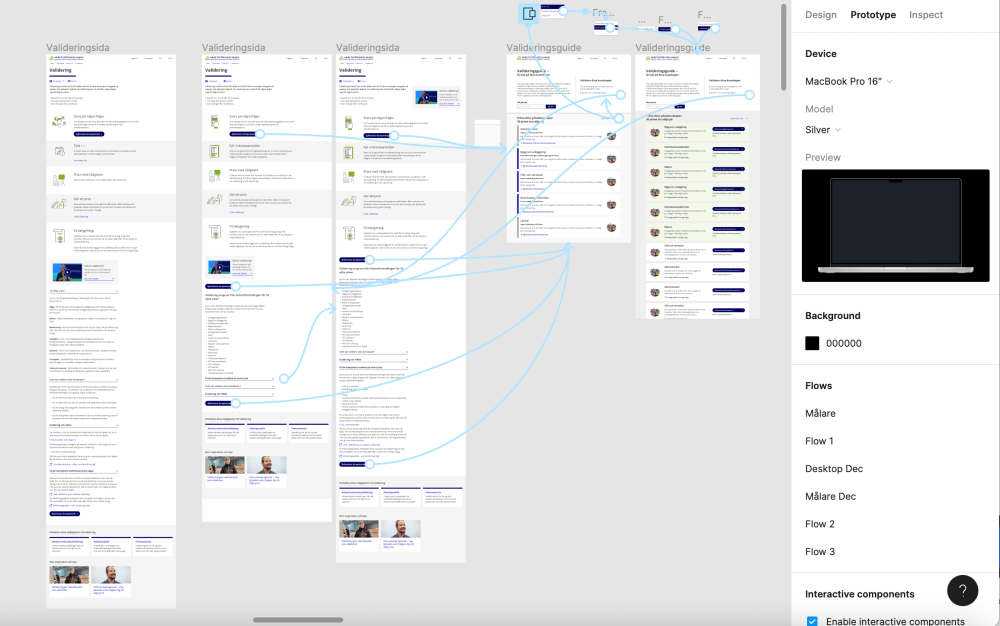
Once the new customer journey map was approved, I developed a prototype which brought this new solution to life. The prototype was used to align with stakeholders and develop an MVP with developers so that it was clear to all parties the expected functionality of the new product. I developed the prototype in Figma which could then be easily used to conduct tests with users.
Testing
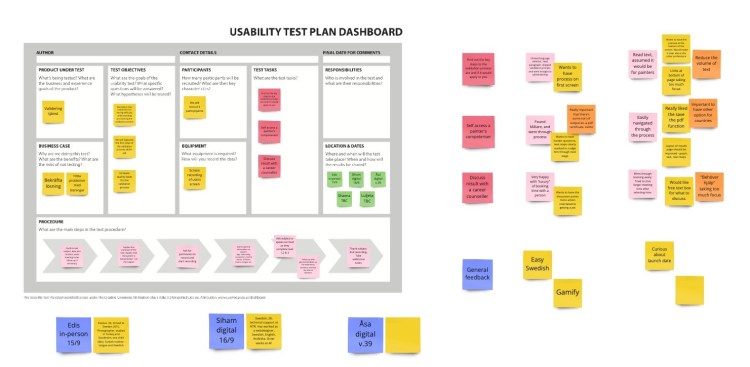
Testing of the product consisted of two parts, first with users to legitimize the design decisions and functionality of the product. The concept was tested with five users to validate the assumptions we had made about the new customer journey. The tests consisted of several tasks which users completed either in person or online with an interactive Figma file, and then an interview to uncover any elements of the design which we had missed or could be improved. The second part of the testing was with internal validation experts to ensure the content of the product was applicable to the desired outcome. I developed a testing plan and feedback collection system for our team of 16 validation experts could evaluate and comment on shortcomings in the product to ensure that the concept met the organizations standards of support.
Design review
I compiled, synthesized and prioritized the feedback from both testing phases and translated it into actionable tickets for how the development team could iterate the design. A review of the solution also included collaborating with the product owners for complimentary solutions which we utilized to launch our service. Once the solution was developed, I conducted an additional demo and design review with the responsible stakeholders which captured the final round of feedback to ensure the solution was ready to be deployed.
Solution
Creating the UX solution for our web application, aimed at validating users’ eligibility for additional support, was both fulfilling and user-focused. I meticulously designed the interface, seamlessly guiding users through a series of questions to determine their needs. The application ensures a supportive and confidential environment, making users feel understood and valued. By simplifying the process, this solution effectively connects individuals with the help they require, fostering a sense of reassurance and empowerment.
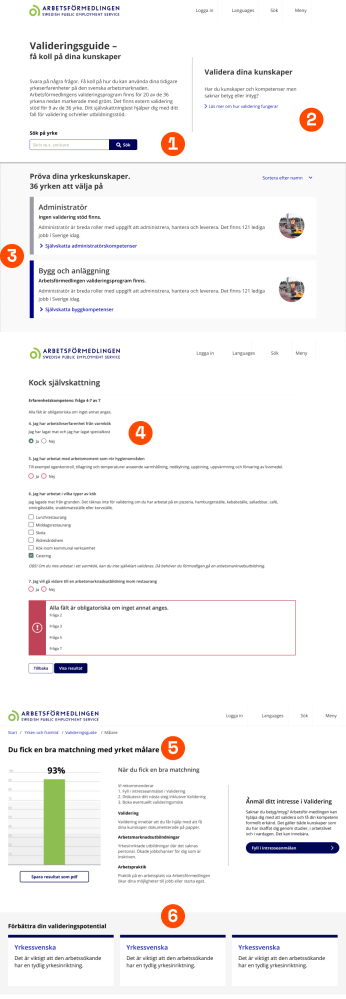
- The tool gives users the possibility to quickly search for self-assessment tests
- Explanation of how the whole process works and more information about requirements can be found with a link which is visible on the first screen
- The different validation options that are available are categorised between those that can lead to a validation and those that will lead to further education in order to increase employment chances
- The self-assessment tests content has been updated, synthesised and digitalised into easy to answer questions including error information to ensure correct completion
- The results page gives the user their assessment and includes an attractive call to action for those that are applicable for the validation support
- Both the text and highlighted supports are tailored to the result and help guide the user in their available options to improve their employment potential
Discover more projects
Capturing market share with data driven storytelling
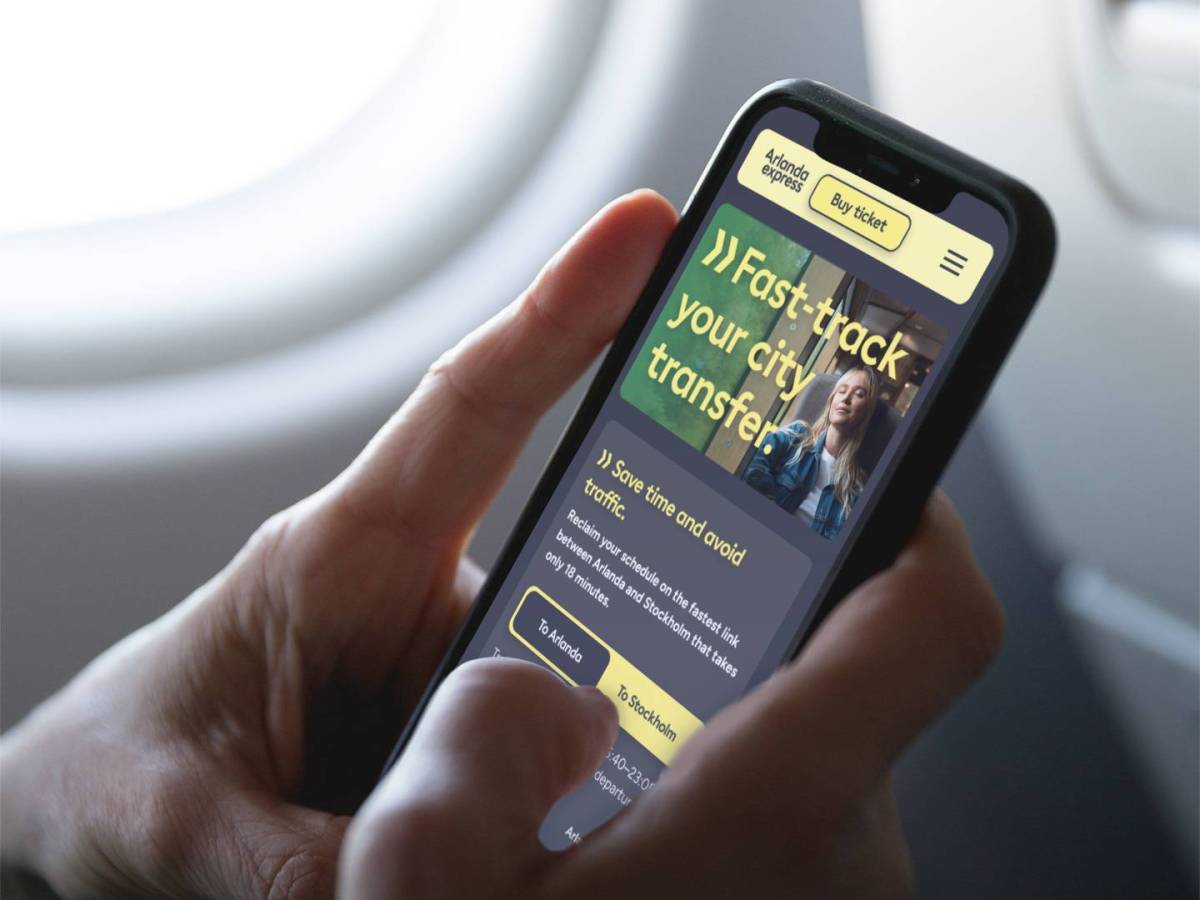
I led the UX/UI design of key Arlanda express webpages to shift the conversation from price to value and convenience, thereby increasing conversion during key…

From filter frustration to concierge car buying
I led the concept development for an intuitive, personalized natural language car search tool that caters to the complexity of human nature and delivers highly…
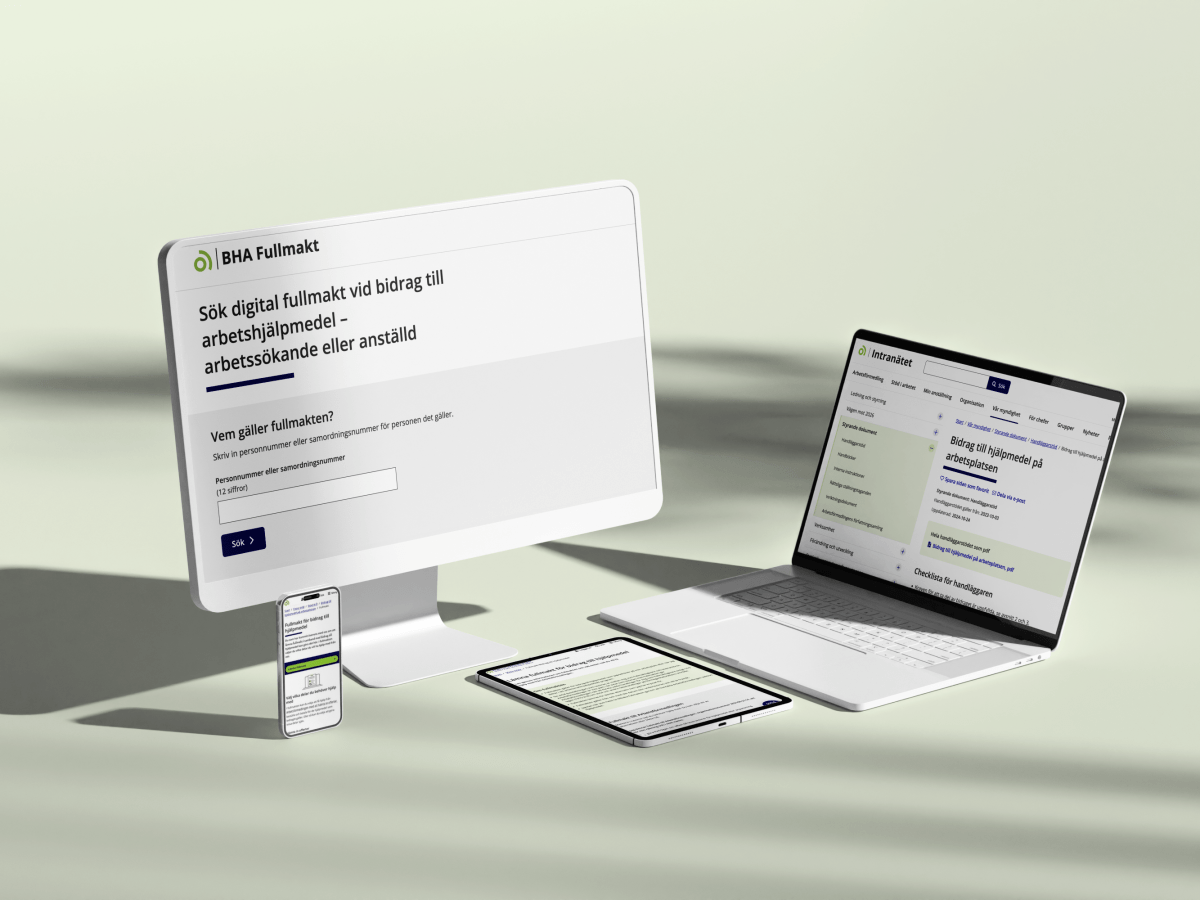
Increased productivity through accessible digitization
I reduced customers’ lead time for medical equipment delivery and reduced case worker administration with an intuitive web application. The existing process involved case workers…
 Fintan Collier